
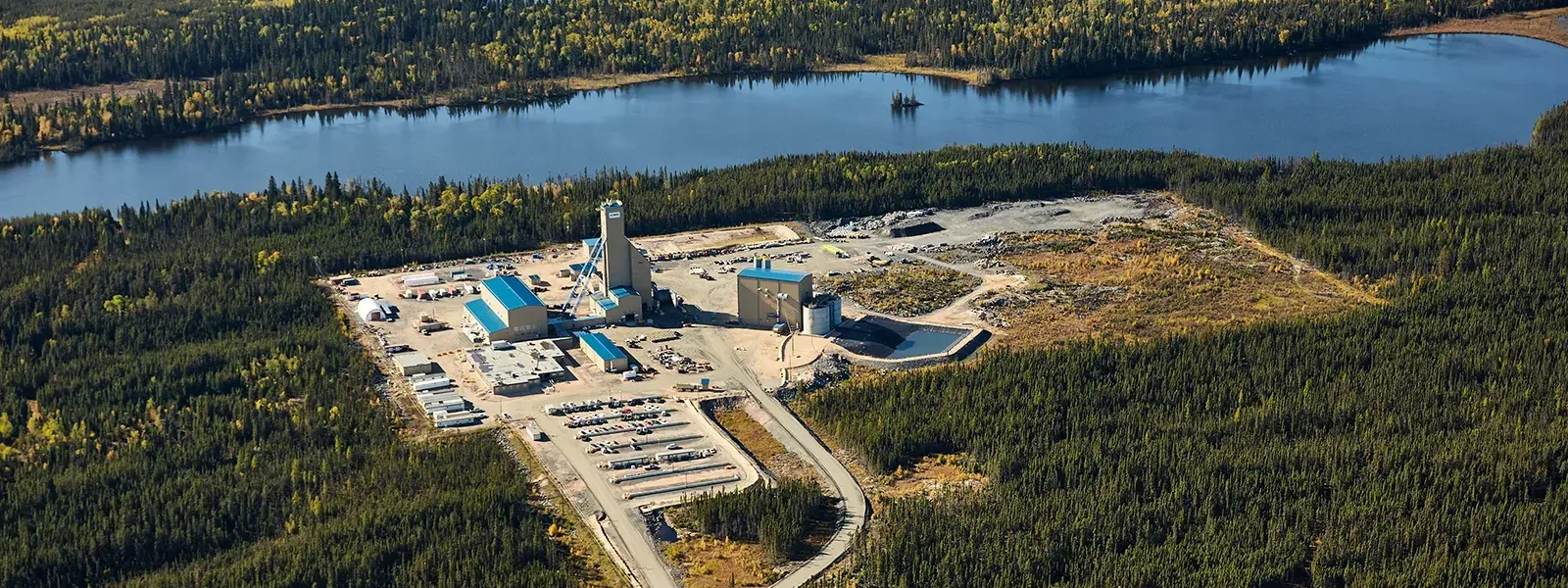
Hudbay’s Operations in Manitoba
For nearly a century, Hudbay has proudly called Manitoba home, forging strong partnerships within the region. Our journey began in 1915 with the discovery that led to the founding of Flin Flon. Since then, we’ve developed and operated 29 mines in the Flin Flon – Snow Lake Greenstone Belt, and we continue to advance our operations in Snow Lake while exploring new opportunities in the area.
The Snow Lake region remains a cornerstone of Hudbay’s growth strategy. With expanding reserves, enhanced processing capacity, and active exploration, we’re poised for a new phase of strong performance. Our Lalor mine, a key low-cost producer of gold, zinc, copper, and silver, has significantly benefited from the 2021 refurbishment of the New Britannia mill. We significantly expanded our land package in 2023 and are actively exploring these new areas to find new deposits and further extend our mine life in Snow Lake beyond 2038.
Land Acknowledgement
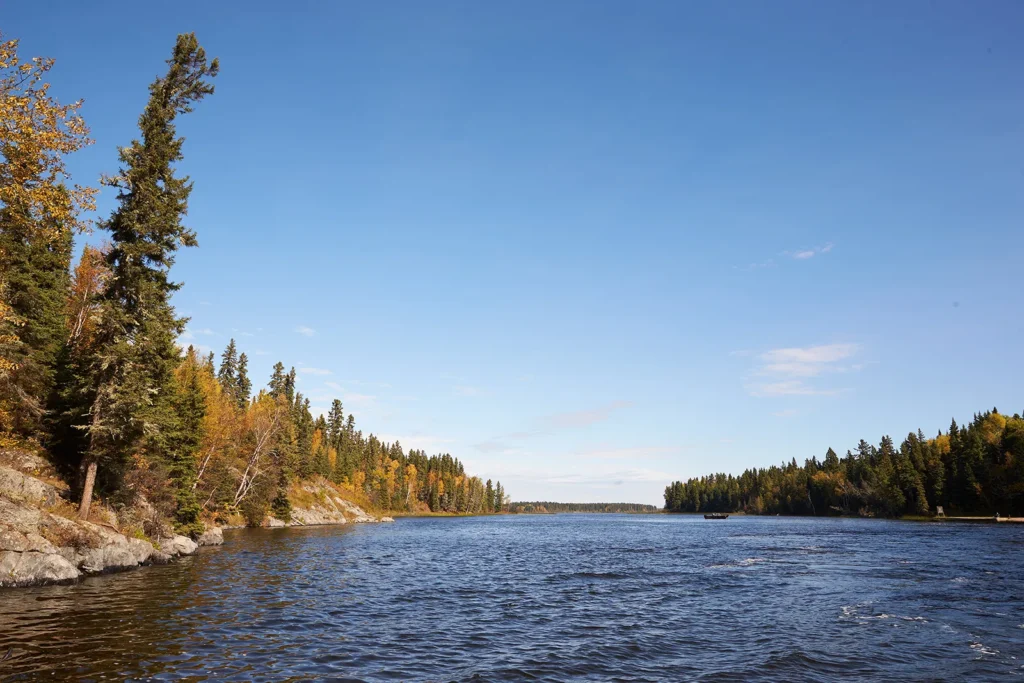
We acknowledge that the land on which Hudbay Minerals operates is situated on the traditional territories of the Swampy Cree and Woodland Cree, the Anishinaabe, Oji-Cree, Dene, and the National Homeland of the Red River Métis. We honour the enduring relationship that these Indigenous peoples have with the land, which has sustained their communities for generations.
We recognize the rich histories, cultures, and traditions that have shaped this region, and we are committed to respecting and supporting the rights of these nations as we engage in our activities. In this spirit, we strive to build meaningful relationships and foster collaboration with Indigenous communities, ensuring that their voices are heard and their contributions valued. We are dedicated to promoting sustainability, stewardship, and reconciliation in all that we do.
Hudbay History in Manitoba
1910s
According to local legend, prospector Tom Creighton registers a claim on land near the 55th parallel in northern Manitoba after being intrigued by “brass yellow glints” in an outcrop. He calls his strike Flin Flon after an adventurous character in an early science fiction novel, Josiah Flintabbatey Flonatin.
1920s
- 1925: After unsuccessful efforts to develop the complex mine, Creighton and his partners sell their stake in the Flin Flon mine. In 1925, a group backed by the Whitney family of New York optioned the property.
- 1927: After feasibility testing and building a pilot mill in Flin Flon, Hudson Bay Mining and Smelting (HBM&S) is incorporated.
1930s
- 1930: Production begins at Flin Flon. At the time, Flin Flon was one of the largest industrial development projects in the Western Hemisphere, second only to the Panama Canal in scale.
1940s
- 1942: During the Second World War, as men went overseas to serve, women entered the labour force to fill the gaps. HBM&S saw women begin to join its workforce in large numbers in 1942, and by 1945, two of every five of the company’s employees were women.
1950s
- Hudbay began exploring in the Snow Lake area, 200 kilometres from Flin Flon. We would go on to discover and produce from nine mines in the Snow Lake region, five of which were within the Chisel basin and home to our current Lalor anchor mine.
1960s
- 1960: Production begins at Chisel Lake mine in Snow Lake.
- 1964: Production begins at Stall Lake mine in Snow Lake.
- 1968: Production begins at Osborne Lake mine in Snow Lake.
1970s
- 1970: Production begins at Anderson Lake mine in Snow Lake.
- 1970: Production begins at Dickstone mine in Snow Lake.
- 1970: Production begins at Ghost Lake / Lost Lake mines in Snow Lake.
- 1974: Hudbay discovers the Trout Lake deposit in Flin Flon.
- 1979: Hudbay opens a concentrator in Snow Lake.
1980s
- 1981: Production begins at Spruce Point mine, located between Flin Flon and Snow Lake.
- 1982: Production begins at the Trout Lake mine in Flin Flon.
- 1984: Production begins at the Rod mine in Snow Lake.
- 1987: Hudbay discovers the Chisel North deposit in Snow Lake.
1990s
- 1992: Hudbay closes the Flin Flon mine. Later in the year the 777 orebody is discovered through underground exploration.
- 1993: Hudbay opens new zinc plant at Flin Flon.
- 1995: Production begins at Photo Lake mine in Snow Lake.
- 1999: Hudbay begins to develop its flagship 777 mine in Flin Flon.
2000s
- 2001: Production begins at the Chisel North mine.
- 2004: First production achieved at the 777 mine.
- 2007: Hudbay discovers the Lalor deposit, located in Snow Lake.
2010s
- 2010: Construction begins at the Lalor mine.
- 2012: Development begins at the Reed mine, between Flin Flon and Snow Lake.
- 2014: Commercial production achieved at the Lalor and Reed mines.
- 2015: Hudbay acquires the past-producing New Britannia mine and mill in Snow Lake.
- 2019: Hudbay announces the initial mine plan for processing Lalor gold ore as part of its Snow Lake gold strategy.
- 2019: Hudbay discovers the 1901 zinc-gold deposit located 1 km away from the underground ramp to Lalor.
2020s
- 2020: Hudbay announces an extended 17-year mine plan for Snow Lake.
- 2021: Hudbay starts gold production at the New Britannia mill in Snow Lake.
- 2022: Hudbay extends the mine life in Snow Lake to 2038 with successful exploration adding mineral reserves at Lalor and the 1901 deposit.
- 2023: Hudbay consolidates prospective land package in Snow Lake with the acquisition of Rockcliff Metals Corp. and the Cook Lake properties.
- 2023: Hudbay announces the potential for extending the mine life in Snow Lake through the discovery of new mineralized zones near Lalor.
- 2024: Hudbay and Marubeni sign an option agreement to advance their exploration partnership in Flin Flon, marking a key step in their collaborative efforts to explore and develop new opportunities.
- 2024: New Britannia mill steadily operates above nameplate capacity and receives expansion permit to 2,500 tonnes per day.
Snow Lake – Operations Overview
Hudbay’s Snow Lake operations feature several key assets central to our growth and efficiency strategy:
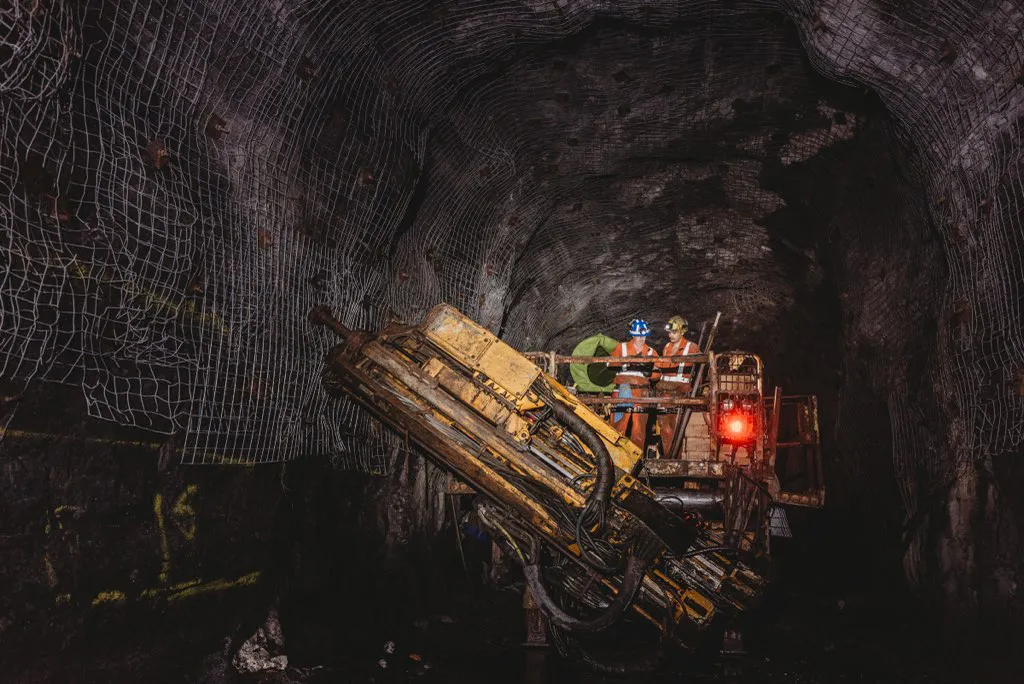
- Lalor Mine: The Lalor mine is an underground operation producing gold, copper, zinc and silver. Since commencing initial production in 2012 and full production in 2014, it has become Hudbay’s flagship operation in Manitoba. The mine utilizes advanced mechanized drilling and blasting techniques, employing cut and fill as well as longhole open-stope mining methods. The successful conversion of high value mineral resources to mineral reserves, together with several operating efficiency initiatives have optimized the mine’s ore production rates at around 4,500 tonnes per day.
- New Britannia Gold Mill: The New Britannia mill processes gold ore from the Lalor mine using advanced techniques to produce copper concentrate and gold/silver bars. The mill significantly enhances the gold production capabilities in Snow Lake and has consistently exceeded its 1,500 tonnes per day original design capacity, setting impressive operational records near 2,000 tonnes per day. Hudbay has also received permit approval to increase future production rates up to 2,500 tonnes per day, allowing for greater processing of Lalor gold ore and additional capacity for potential regional discoveries in Snow Lake.
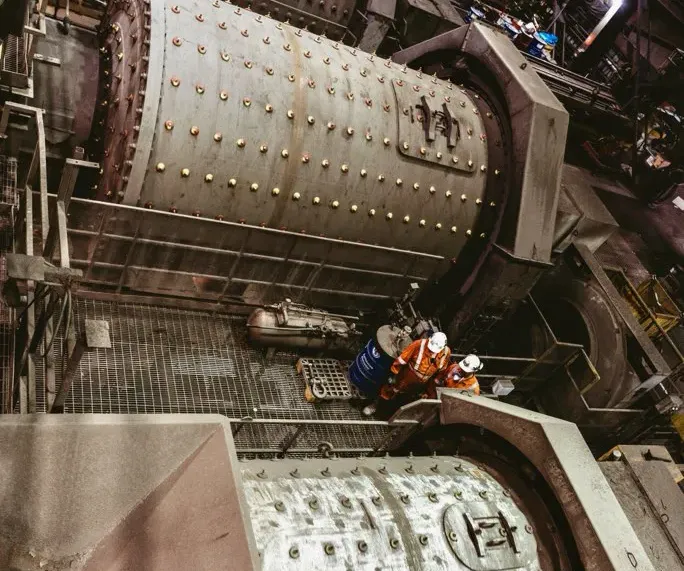
- Stall Base Metals Concentrator: The Stall concentrator processes base metal ore from the Lalor mine and has a design capacity of 3,800 tonnes per day. Hudbay has upgraded equipment and facilities at the mill to further improve copper and gold recovery performance. Tailings are combined with the tailings from the New Britannia mill and are either pumped to the Lalor paste plant, where it is reused as paste backfill underground, or diverted to the Anderson tailings impoundment area.
- Satellite Deposits: Satellite deposits are mineral resources located near a primary mining operation that can provide additional feed for processing facilities. The Snow Lake operations include several satellite deposits that can enhance processing capabilities and extend operational life. Key deposits are:
- 1901 Deposit: Located near Lalor, access to this zinc-gold deposit is expected in 2025 to allow for infill drilling and resource conversion, and production is expected in 2027.
- WIM Deposit: A copper-gold deposit that adds additional production potential.
- 3 Zone: A gold-rich deposit that adds to the overall gold production potential.
- Watts, Pen II, and Talbot Deposits: These regional zinc-copper rich deposits have the potential to utilize spare processing capacity in Snow Lake and bolster production.
- These satellite deposits support our strategy to maximize and extend the life of the Snow Lake operations beyond 2038.
Each asset plays a crucial role in driving our operational success and strategic expansion. Hudbay’s Manitoba production provides:
- Strong Reserves and Long Mine Life: The Snow Lake operations boast 17 million tonnes of mineral reserves, including around 2 million ounces of gold. Hudbay expects to keep mining here until 2038 and beyond.
- Boosted Production: In 2023, the New Britannia mill exceeded its design capacity by 10%, enhancing our gold output with the potential to expand to a permitted capacity of ~2,500 average tonnes per day. Hudbay also upgraded the Stall mill and continues to improve operations at the Lalor mine to get better ore quality and reduce waste.
- Expansion and Exploration: In 2023, we expanded our Snow Lake land package by 250% and launched the largest-ever geophysics survey and drilling program in the company’s history for the 2024 exploration season. This effort aims to find new resources and further extend the life of Snow Lake beyond 2038. The exploration activities are focused both on near-mine exploration at Lalor and the testing of promising regional targets.
- Ongoing Development: A new access drift is being developed at the 1901 deposit and is expected to reach mineralization in early 2025. Future underground drilling is planned to further confirm the optimal mining method to extract the base metal and gold lenses and to convert gold inferred resources into mineral reserves.
- Growing Gold Production: Since the New Britannia mill began operating in late 2021, the Manitoba operations gold production has increased significantly, from 69,657 ounces produced in 2020 to a record 187,363 ounces in 2023. The company expects to maintain annual production of approximately 185,000 ounces over the next three years.
For more information:
Flin Flon Opportunities: Tailings Reprocessing and Strategic Partnerships
Hudbay is actively advancing studies to reprocess over 100 million tonnes of tailings in Flin Flon, which has accumulated over the past 90 years. The company aims to repurpose the existing Flin Flon concentrator, which is currently on care and maintenance, to recover critical minerals and precious metals, providing economic, environmental, and social benefits to the region.
In 2023, Hudbay expanded its efforts in the Flin Flon region through strategic partnerships, including an option agreement with Marubeni Corporation of Japan. This collaboration aims to fund exploration efforts for new mineral deposits within trucking distance of Flin Flon, further enhancing the region’s potential.
Recent metallurgical test work and drilling confirmed the presence of precious metals and critical minerals within the tailings facility. The initial economic evaluation of the zinc plant tailings has shown promising results, prompting further engineering work in the near future. Similar studies are planned for the mill tailings.